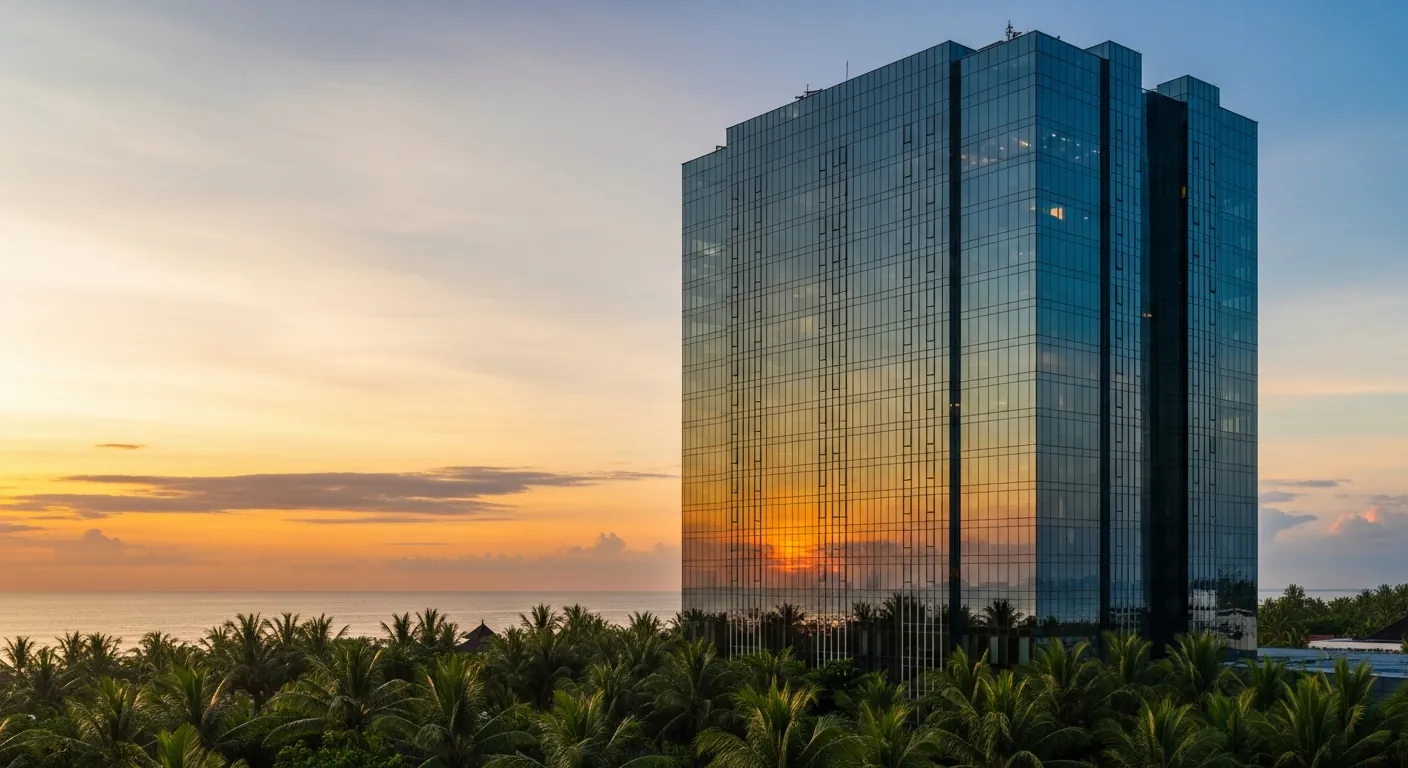
The soft light of dawn illuminates the volcanic peaks of Bali, an island long synonymous with cultural richness and natural beauty. Now, a new economic narrative unfolds, positioning Bali not just as a global destination for tourism but as an emerging cornerstone of Asian finance. This transformation is rooted in a meticulously planned strategy to establish a sophisticated international financial center, backed by significant political will and a tailored regulatory environment.
The Vision: Bali as an International Financial Center
Bali, a province of Indonesia with its provincial capital city located in Denpasar on the southern part of the island, is undergoing a profound economic reorientation. The concept of a Bali financial hub is intrinsically linked to the planned development of a financial center within the Kura Kura Special Economic Zone (KEK Kura-Kura) on Serangan Island, situated approximately 500 meters south of Denpasar. This strategic location provides a secure, self-contained environment for financial operations. The initiative gained significant public momentum with Indonesia’s Coordinating Minister for Economic Affairs, Airlangga Hartarto, who announced the finalisation of regulations for the hub, signaling a clear path forward for its establishment. In April 2024, Indonesian President Prabowo Subianto further solidified this commitment, stating plans to set up a special financial center in Bali. President Subianto’s rationale emphasizes capitalizing on Indonesia’s status as a safe country, a key differentiator in attracting global investment. A financial center is defined as a location with a significant concentration of commerce in financial services, often hosting banks, insurance companies, and financial regulatory authorities. This definition underscores the ambition for KEK Kura-Kura to become a comprehensive ecosystem for financial activity, fostering a robust environment for capital flow and sophisticated financial instruments. The regulatory framework, overseen by institutions such as OJK (Financial Services Authority) and Bank Indonesia, is being designed to offer stability and clarity for international investors.
Special Economic Zones: KEK Kura-Kura and KEK Sanur
The backbone of Bali’s financial hub ambition lies in its Special Economic Zones (SEZs), particularly KEK Kura-Kura and KEK Sanur. These zones offer distinct advantages, including fiscal incentives, streamlined regulations, and dedicated infrastructure, designed to attract foreign direct investment (FDI). KEK Kura-Kura on Serangan Island is specifically earmarked for the core financial center, providing a dedicated space for financial institutions, family offices, and supporting services. The proximity to Denpasar, Bali’s provincial capital, ensures access to a skilled workforce and existing infrastructure. Bali had a population of approximately 4.3 million people according to the 2020 Indonesian census, providing a substantial local talent pool for various sectors. KEK Sanur, while not exclusively a financial center, complements KEK Kura-Kura by developing a medical and tourism hub, which can indirectly support the financial ecosystem by attracting high-net-worth individuals and their associated financial needs. These SEZs function under a special regime that deviates from general Indonesian law in specific areas, offering a more competitive environment for international businesses. The regulatory framework within these zones is designed to be agile and responsive to the demands of global finance, ensuring a conducive environment for long-term growth and stability. Investors operating within these zones benefit from clarity in legal and tax structures, which are critical for large-scale financial operations.
The Family Office Regime: A Strategic Differentiator
A significant component of the Bali financial hub’s value proposition is its pioneering Family Office regime. This specialized framework is crafted to attract ultra-high-net-worth individuals and families seeking sophisticated wealth management, philanthropic advisory, and intergenerational wealth transfer services. The regime offers a tailored regulatory environment, designed to provide confidentiality, efficiency, and flexibility that are paramount for family offices. This focus positions Bali directly against established centers by offering a bespoke solution in a rapidly growing segment of global wealth management. The Indonesian government recognizes the immense capital and expertise that family offices bring, and the Bali initiative aims to capture a share of this global market. The regulatory framework for family offices in Bali is expected to provide clear guidelines on establishment, governance, and permissible activities, ensuring both compliance and operational ease. This strategic emphasis on family offices distinguishes Bali from other emerging financial centers that may focus more broadly on corporate finance or traditional banking. The unique cultural and lifestyle appeal of Bali also serves as an additional draw for family offices, offering a desirable environment for both business and personal life.
Regulatory Framework: OJK, Bank Indonesia, and International Standards
The integrity and competitiveness of the Bali financial hub hinge on a robust and transparent regulatory framework. OJK (Otoritas Jasa Keuangan), Indonesia’s Financial Services Authority, and Bank Indonesia, the central bank, are the key institutions overseeing the financial sector. Their mandate extends to ensuring financial stability, consumer protection, and adherence to international best practices. The regulations governing the Bali financial hub are being meticulously crafted to align with global standards for financial crime prevention, anti-money laundering (AML), and counter-terrorist financing (CTF). This commitment to international compliance is crucial for building trust among global investors and financial institutions. The regulatory environment within the KEKs is designed to be progressive, offering a balance between robust oversight and operational flexibility. Regular consultations with industry stakeholders and international experts are part of the process to ensure the framework remains competitive and responsive to market dynamics. This collaborative approach aims to create a regulatory ecosystem that not only safeguards the financial system but also fosters innovation and growth. The stability provided by a clear and consistent regulatory environment is a primary consideration for institutional investors and family offices assessing new financial centers.
Bali’s Competitive Edge: Against Singapore, Hong Kong, and Dubai
Bali enters a competitive landscape dominated by established financial centers like Singapore, Hong Kong, and Dubai. While these hubs possess deep markets and extensive infrastructure, Bali offers a distinct value proposition. Firstly, Indonesia’s large and growing domestic economy provides a substantial base for financial services, unlike some offshore centers. Secondly, the specialized focus on the Family Office regime and specific sectors within the SEZs allows for a targeted approach, avoiding direct, broad-based competition. Thirdly, the unique lifestyle and cultural appeal of Bali act as a significant draw for talent and high-net-worth individuals, offering a quality of life that some major financial centers struggle to match. Singapore, consistently ranked among the top global financial centers, offers a mature market and robust legal system. Hong Kong, despite recent geopolitical shifts, retains its status as a gateway to mainland China. Dubai has carved a niche in Islamic finance and as a bridge between East and West. Bali differentiates itself by leveraging its unique geographic and cultural advantages alongside a tailored regulatory and incentive structure. The proactive government support, as evidenced by President Prabowo Subianto’s statements, further strengthens Bali’s position, signaling a long-term commitment to its success as an Asian financial hub. This strategic positioning aims to capture specific market segments and complement, rather than directly challenge, the established giants.
Please note that financial regulations and figures are subject to change. For current and accurate information, it is advisable to consult with a licensed Indonesian professional.
For further insights into the evolving landscape of Bali’s financial ecosystem, explore the official resources of the Indonesian government, learn about the concept of financial centers, and track the Global Financial Centres Index.
The emergence of the bali financial hub signifies a pivotal moment for Indonesia and the broader Asian financial landscape. This strategic initiative, underpinned by robust regulatory frameworks, dedicated special economic zones, and a targeted approach to global capital, positions Bali as a compelling destination for institutional investors, family offices, and finance professionals. To learn more about how Bali is shaping the future of finance, continue exploring our comprehensive resources at balifinancialhub.id.